
Skip to content

Independent referral service: calls connect you with participating North Carolina restoration companies. How it works

North Carolina Water Damage

Crawl spaces and basements

Crawl Space Water Removal in North Carolina

Many North Carolina homes sit over a crawl space, and that's where leaks and floodwater often end up. What crawl space water removal involves and when it's urgent.

(980) 217-5532 · Referral to a participating independent company

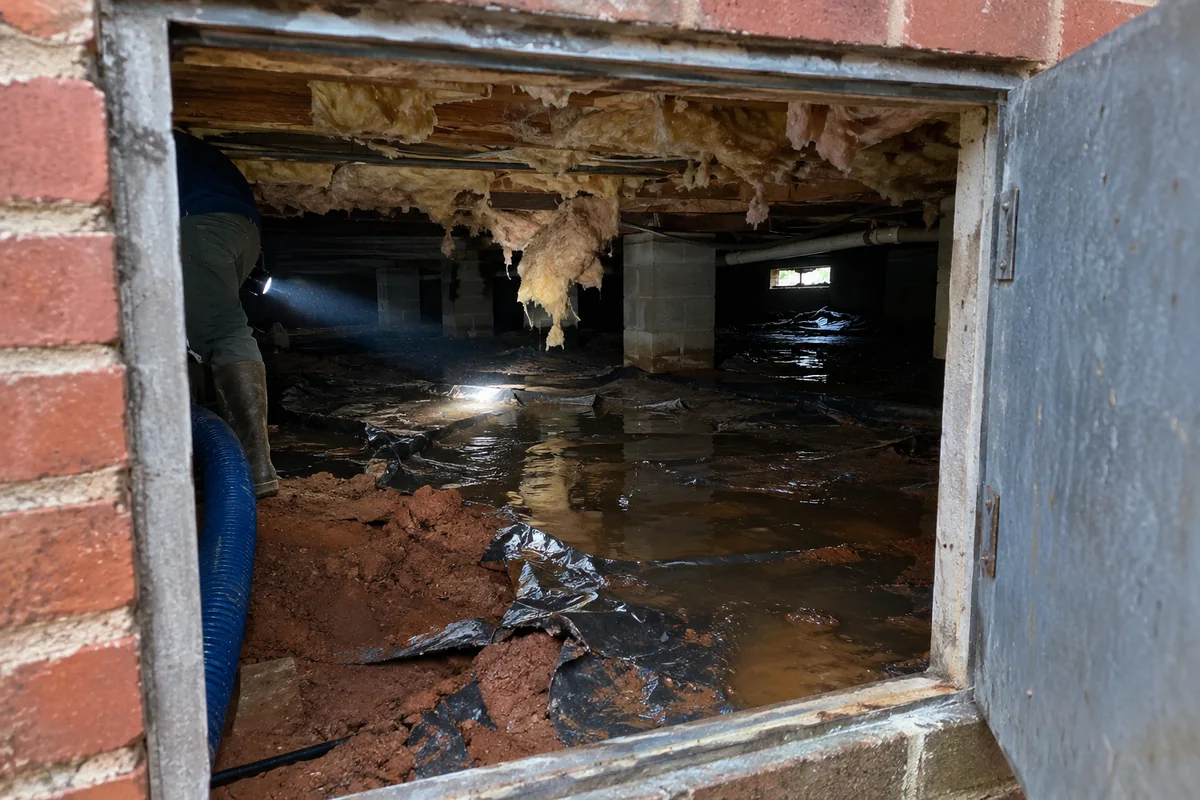
Standing water and sagging insulation in a North Carolina crawl space viewed through the access door

Last updated: 2026-10-09

North Carolina Water Damage is a referral service that connects North Carolina homeowners with participating independent restoration companies for crawl space water removal. Most water damage advice online assumes a basement. Here, many homes are built over a crawl space instead, and water in a crawl space behaves differently, mostly because nobody sees it until the floors or the smell give it away.

Where crawl space water comes from

  • Plumbing leaks above. A burst supply line, water heater, or dishwasher leak runs through the subfloor and collects on the vapor barrier.
  • Leaks in the crawl space itself. Supply and drain lines run through the crawl space and can freeze or crack there.
  • Groundwater and surface runoff. Poor grading, clogged gutters, and downspouts that dump next to the foundation send rainwater into the crawl space after heavy storms.
  • Flooding. Rising water fills the crawl space first.
  • Condensation. Humid summer air meets cool ductwork and floor framing, and water drips from sweating ducts. This builds slowly, not in a single event.

Why it matters even if the living space looks fine

Standing water and high humidity under the house soak fiberglass insulation (it sags and falls out of the joists), raise the moisture content of floor framing, and feed mold and wood decay. Signs in the house above include a musty smell, hardwood floors that cup, soft spots, and higher indoor humidity.

Wood framing is generally considered at risk for mold and decay once its moisture content stays above about 19%, the threshold lumber is graded dry against. A restoration company measures it with a pin meter, which is the fastest way to know how serious a wet crawl space is.

What crawl space water removal involves

Crawl space jobs are slower and more physical than room jobs because the work is done crawling. A typical sequence:

  • Pumping or extracting standing water, and finding where it came from
  • Removing wet or fallen insulation and a damaged vapor barrier
  • Removing contaminated debris after sewage or floodwater, and treating surfaces
  • Drying the framing with dehumidifiers and air movers, checking wood moisture content until it's back in range
  • Replacing the vapor barrier and insulation, or recommending an encapsulation contractor if water keeps returning

Closed crawl spaces and encapsulation

North Carolina's residential code allows closed (sealed) crawl spaces, and much of the field research on them was done in North Carolina. Encapsulation, which seals the vents, lines the walls and floor, and adds a dehumidifier, is a prevention project rather than water damage cleanup. It's often done by a separate crawl space contractor once the immediate water problem is fixed and dried.

Basements in North Carolina

Basements are less common here than up north, but you'll find them in older homes, in hilly parts of the Piedmont and mountains, and in walk-out designs. Basement water removal follows the same steps: stop the source, extract, remove what can't be saved, and dry. Water coming up through a floor drain may be a sewer backup, which is Category 3 and usually needs its own insurance endorsement.

When a wet crawl space is urgent

  • Standing water you can see from the access door
  • Water from a sewer or drain line, or from outside flooding
  • Insulation hanging down or lying on the ground
  • A musty smell in the house that wasn't there before
  • Floors that have started to cup, buckle, or feel soft
  • A leak above that ran for hours before it was found
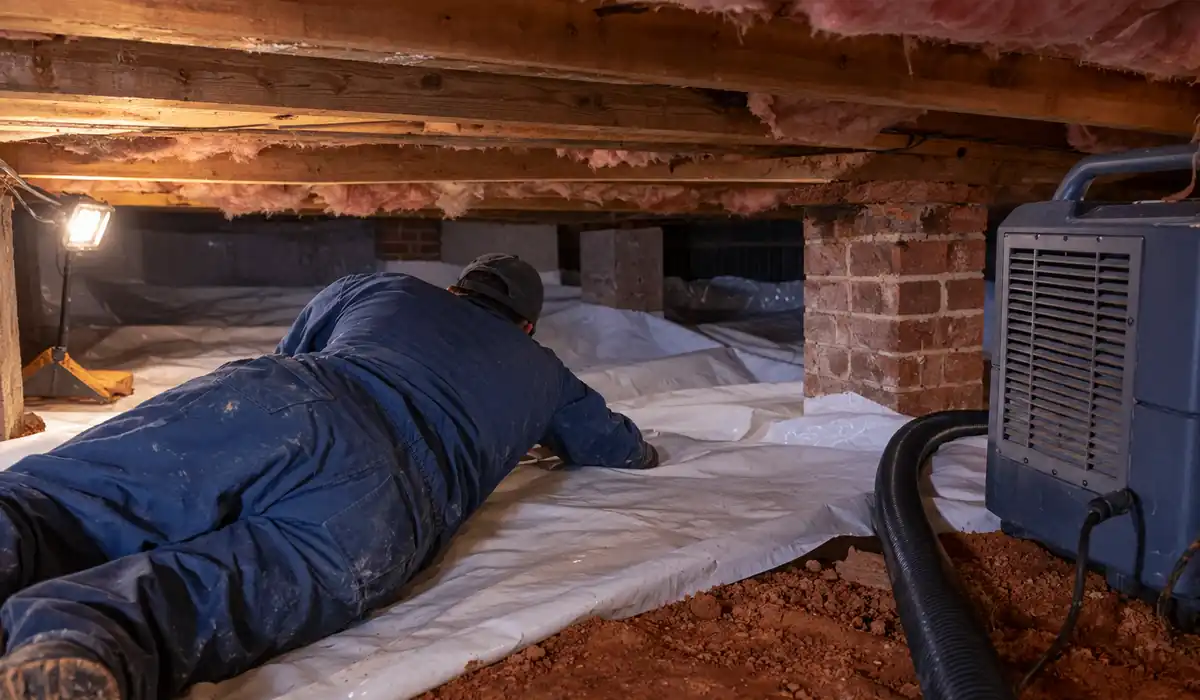
Pump hose and dehumidifier set up in a crawl space with new vapor barrier

What to do if you find water in your crawl space

  1. Stop any active leak by shutting off the main water valve.
  2. Don't crawl into standing water near wiring, the HVAC unit, or a well pump. Shut off power to equipment in the crawl space only if you can do it safely.
  3. Photograph it from the access door for your records and insurer.
  4. Check gutters and downspouts if the water arrived after heavy rain.
  5. Call a restoration company to extract and dry it. Crawl spaces don't dry on their own in humid weather.

Related water damage guides

Straight comparison

DIY cleanup or a professional restoration company?

 DIY with a shop-vac and fansProfessional restoration
Small, clean-water spill caught right awayOften fine: a few square feet of hard floor, dried within a dayUsually not needed
Water under flooring or inside wallsFans dry the surface; moisture stays in pad, subfloor, and wall cavitiesMoisture meters and thermal cameras find hidden water; drying is checked with readings
Sewage or floodwater (Category 3)Not safe for DIY: bacteria and contaminants soak into porous materialsProtective gear, removal of contaminated materials, cleaning and antimicrobial treatment
Wet crawl spaceHard to reach, hard to dry, easy to missPumps, extraction, and dehumidification sized to the space
Insurance claimYou document it yourselfPhoto and moisture-reading records adjusters ask for
Mold riskUnknown until it smells or showsDrying is verified against target readings to cut mold risk

What restoration involves

The water damage restoration process, step by step

  1. Inspection and moisture mapping

    The restoration company finds the water source, identifies the water category (clean, gray, or black under the IICRC S500 standard), and maps how far moisture has spread into floors, walls, and framing with moisture meters.

  2. Water extraction

    Standing water is pulled out with truck-mounted or portable extractors. Extraction removes far more water than drying ever will, so it comes first.

  3. Removal of what can't be saved

    Saturated carpet pad, swollen particleboard, and wet insulation usually come out. After sewage or floodwater, porous materials that touched the water are removed.

  4. Structural drying

    Air movers and dehumidifiers run for several days while the technician takes daily readings until materials reach dry targets.

  5. Repairs

    Drywall, flooring, and trim are replaced once everything reads dry. Some restoration companies handle rebuild themselves; others refer it out.

How the referral works

How our contractor-matching service works

  1. You call the number on this site

    Have the property's address or ZIP code ready, plus a short description of what happened: a burst pipe, flooding, a leak, a wet crawl space.

  2. Your call is routed to a participating company

    Your call is connected with a participating independent restoration company that serves your area, if one is available. We do not send a crew ourselves.

  3. You deal with that company directly

    The restoration company inspects, quotes, and does the work under its own name, license, and insurance. You decide whether to hire them; there is no obligation.

Good to know: availability depends on which participating companies cover your ZIP code and how busy they are. Ask the company you're connected with about its license, insurance, written estimate, and timeline before work starts. Our water damage guides cover what to ask.

Request Water Damage Assistance

Call and we will try to connect you with a participating independent water damage restoration company that serves your area.

Questions

Crawl Space & Basement Water Removal questions

Is some water in a crawl space normal?

A little dampness after heavy rain is common. Standing water, wet insulation, or a musty smell in the house is not. Water left under the house raises framing moisture and mold risk, and it doesn't dry on its own in a humid North Carolina summer.

Does homeowners insurance cover a wet crawl space?

It depends on the source. Water from a sudden plumbing leak is usually covered. Groundwater seepage, poor drainage, and condensation over time are usually excluded, and flooding needs flood insurance. Sewer backup needs an endorsement.

How long does it take to dry a crawl space?

Often several days to a week or more after the standing water is removed, depending on how wet the framing got and the weather. Drying is done when wood moisture readings are back in a safe range, not on a set schedule.

Will encapsulation stop water from getting in?

Encapsulation controls humidity and ground moisture; it doesn't stop a plumbing leak or floodwater. If water is entering from outside, grading, gutters, or a drainage system and sump pump are the fix. A crawl space contractor can assess which you need.

Call (980) 217-5532 · Get Help