
Last updated: 2026-10-09
North Carolina Water Damage is a referral service that connects North Carolina homeowners and property managers with participating independent restoration companies for emergency water removal. This page covers what water extraction is, what happens on the first visit, and what you can safely do while you wait.
What emergency water removal involves
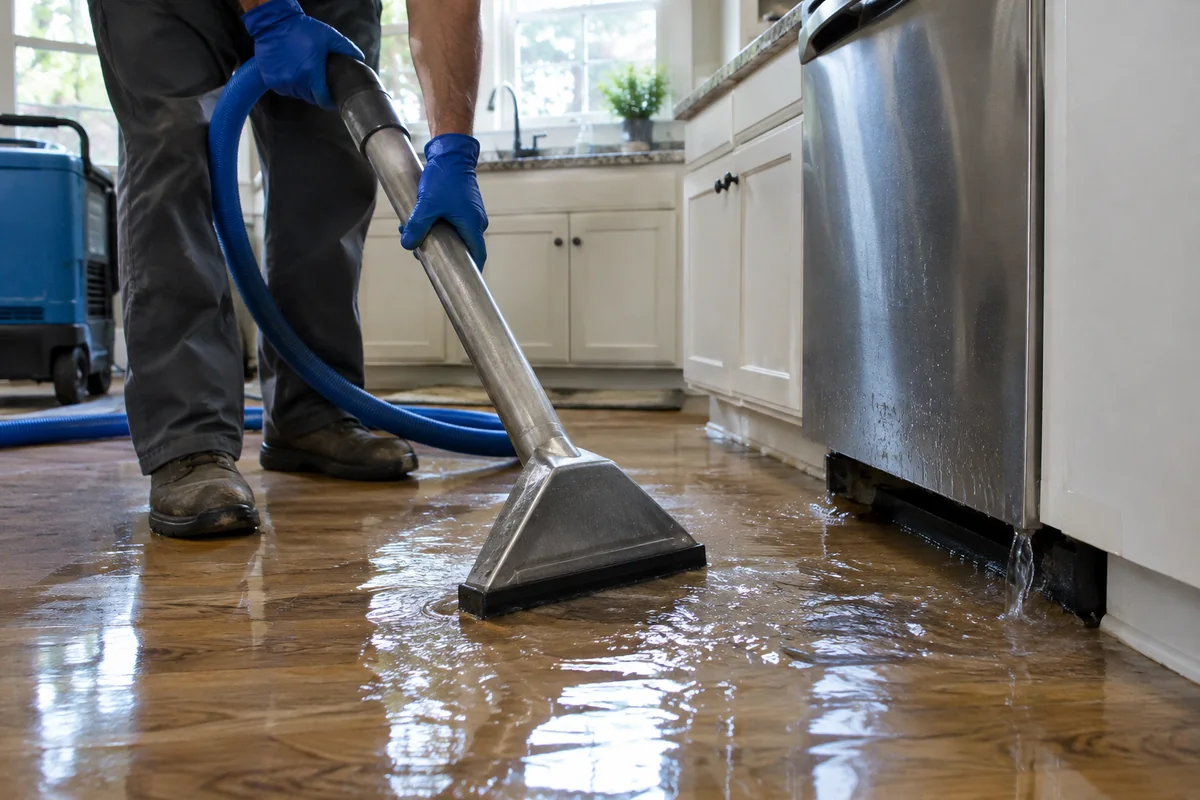
Emergency water removal, also called water extraction, is the first and most time-sensitive part of any water damage job. The goal is simple: get as much liquid water out of the building as possible before it soaks deeper into flooring, subfloor, drywall, and framing.
Extraction matters more than drying equipment. A fan or dehumidifier removes water by evaporation, a little at a time. An extractor pulls it out as liquid, so every gallon removed now is a gallon the drying equipment never has to deal with. That's why restoration companies extract first and set drying equipment second.
The equipment a restoration company brings
Expect some combination of the following, depending on how much water there is and where it went:
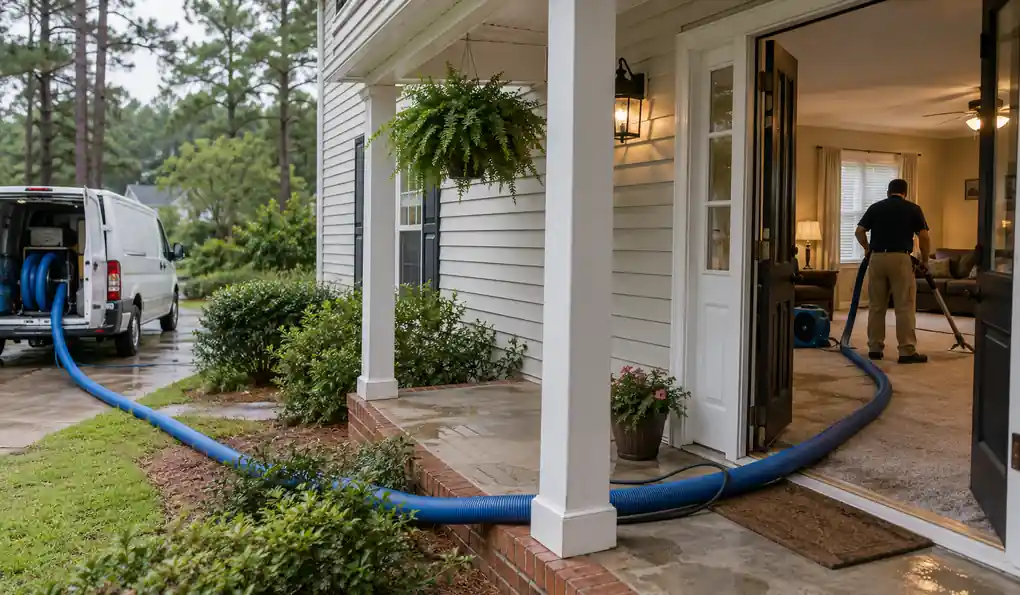
- Truck-mounted extractors for large volumes, with hoses run into the house. They are powerful and keep the noise and exhaust outside.
- Portable extractors for upper floors, apartments, and places a truck hose can't reach.
- Submersible pumps when there are inches of standing water, such as a flooded crawl space or garage.
- Weighted or ride-on extraction tools that press water out of carpet and pad rather than just skimming the surface.
- Moisture meters and thermal cameras to find water that has spread under flooring or into walls where you can't see it.
Carpet, pad, and hardwood: what can be saved
With clean water (Category 1 under the IICRC S500 standard) caught quickly, carpet can often be extracted and dried in place. Carpet pad is cheap and acts like a sponge, so it's commonly removed and replaced even when the carpet is kept.
With gray or black water, such as a washing machine discharge, toilet overflow, sewage, or outside floodwater, carpet and pad that the water touched are generally removed. Hardwood floors can sometimes be saved with specialty drying mats if work starts quickly; cupping that appears in the first few days often settles as the wood dries, while boards that crown or buckle badly may need replacing.
Why speed matters
The EPA's guidance is to dry water-damaged materials within 24 to 48 hours to prevent mold growth. Clean water also degrades as it sits: a leak that starts as Category 1 can be treated as Category 2 after a couple of days, which means more material removal and a higher bill. Fast extraction is the cheapest part of the job and the part that saves the most money later.
Availability varies. Participating companies set their own schedules, so ask the company you're connected with when it can be on site.
When water removal needs a professional
- More than a small puddle on hard flooring, or any water on carpet
- Water that has run under baseboards, cabinets, or flooring
- Water on more than one level of the house, or coming through a ceiling
- Standing water in a crawl space or garage
- Any water from a toilet, sewer line, or outside flooding
- A rental or multi-unit building where water crossed into another unit
What to do while you wait
- Stop the source. Shut off the main water valve or the fixture's supply valve.
- Stay safe around electricity. Don't walk through water near outlets, cords, or appliances. Shut off the breaker only if you can do it from a dry spot.
- Photograph and video everything, including the leak source, before cleanup starts.
- Move what you can: rugs, electronics, papers, and furniture off wet floors. Put foil or blocks under furniture legs that must stay.
- Mop or towel up small amounts of clean water. Don't use a household vacuum on water.
- Call your insurer to report the loss.