
Skip to content

Independent referral service: calls connect you with participating North Carolina restoration companies. How it works

North Carolina Water Damage

Drying and dehumidification

Structural Drying After Water Damage

After extraction, the water left inside floors, walls, and framing has to be dried out with equipment and verified with readings. Here's how structural drying works and how long it takes.

(980) 217-5532 · Referral to a participating independent company

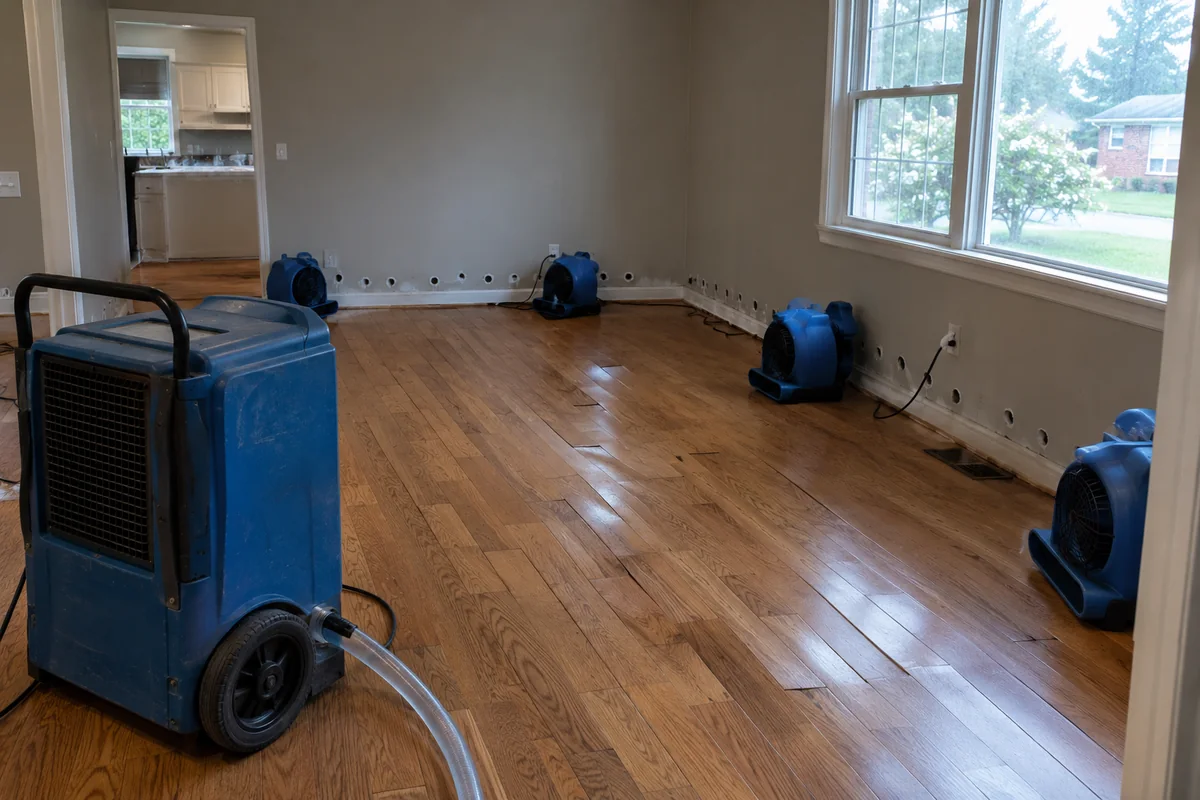
Air movers aimed at a wall and a commercial dehumidifier running in a North Carolina home

Last updated: 2026-10-09

North Carolina Water Damage is a referral service that connects North Carolina homeowners with participating independent restoration companies, including companies that handle structural drying. Drying is the longest part of most water damage jobs and the easiest to cut short, so it's worth understanding what good drying looks like.

What structural drying is

Structural drying removes water that has soaked into the building itself, such as subfloor, drywall, framing, hardwood, and concrete, after the standing water has been extracted. It uses controlled airflow, dehumidification, and sometimes heat to pull moisture out of materials and then out of the air.

The IICRC S500 standard treats this as applied science: the restoration company calculates how much equipment a space needs from its size and the class of water loss, then adjusts based on daily readings.

The equipment

  • Air movers blow across wet surfaces to speed evaporation. They're loud and they run around the clock.
  • Low-grain refrigerant (LGR) dehumidifiers pull the evaporated water out of the air. Without them, fans just move humid air around.
  • Desiccant dehumidifiers for dense materials, cold spaces, and hardwood, where they can reach drier air than refrigerant units.
  • Hardwood drying mats and wall-cavity injection to push dry air into floors and closed walls without tearing them out.
  • Moisture meters, thermo-hygrometers, and thermal cameras to measure progress.

How restoration companies decide it's dry

"Dry" is a measurement, not a feeling. Good practice is to take readings from an unaffected area of the same material, which becomes the drying goal, and then log readings in the wet areas every day until they match. Air temperature and humidity are logged too.

Ask for those logs. They show when the job was really finished, and your insurer may ask for them. Equipment pulled early because the surface feels dry can leave water inside walls and under floors, which is how mold shows up weeks later.

How long structural drying takes

A typical clean-water loss in a room or two usually dries in about three to five days. Hardwood, plaster, concrete, and crawl spaces take longer. Big losses with many layers of wet material can run a week or more.

North Carolina's summer humidity is one reason drying here relies on dehumidifiers instead of open windows. Opening up the house on a muggy day adds moisture rather than removing it.

When you need professional drying

  • Water soaked into drywall, wicking up from the floor
  • Wet hardwood, laminate, or subfloor
  • Water inside a wall or ceiling cavity
  • A wet crawl space or concrete slab
  • Anything still wet after a day of fans
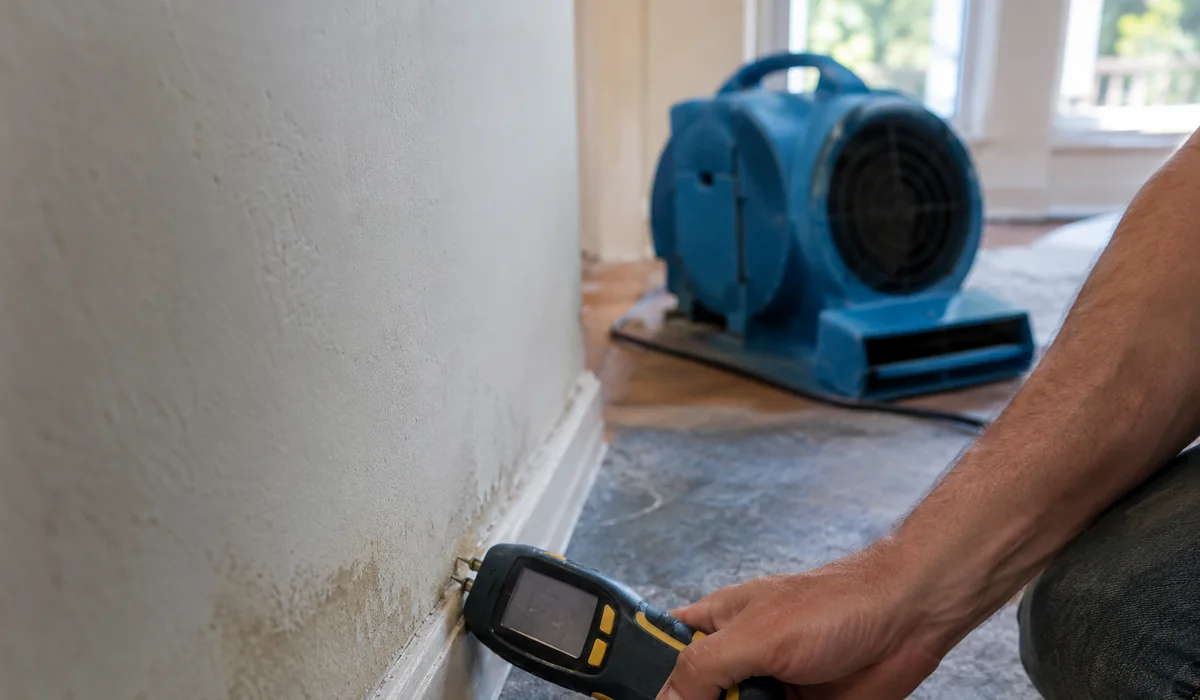
Technician taking a moisture meter reading on baseboard and drywall

What you can do to help drying

  1. Leave the equipment running, even overnight. Turning it off adds days.
  2. Keep doors and windows closed in the drying area unless the technician says otherwise.
  3. Keep your HVAC running at a normal temperature unless told to change it.
  4. Don't move equipment: it's positioned to aim at specific wet areas.
  5. Ask for the daily moisture readings and keep a copy for your claim.

Related water damage guides

Straight comparison

DIY cleanup or a professional restoration company?

 DIY with a shop-vac and fansProfessional restoration
Small, clean-water spill caught right awayOften fine: a few square feet of hard floor, dried within a dayUsually not needed
Water under flooring or inside wallsFans dry the surface; moisture stays in pad, subfloor, and wall cavitiesMoisture meters and thermal cameras find hidden water; drying is checked with readings
Sewage or floodwater (Category 3)Not safe for DIY: bacteria and contaminants soak into porous materialsProtective gear, removal of contaminated materials, cleaning and antimicrobial treatment
Wet crawl spaceHard to reach, hard to dry, easy to missPumps, extraction, and dehumidification sized to the space
Insurance claimYou document it yourselfPhoto and moisture-reading records adjusters ask for
Mold riskUnknown until it smells or showsDrying is verified against target readings to cut mold risk

What restoration involves

The water damage restoration process, step by step

  1. Inspection and moisture mapping

    The restoration company finds the water source, identifies the water category (clean, gray, or black under the IICRC S500 standard), and maps how far moisture has spread into floors, walls, and framing with moisture meters.

  2. Water extraction

    Standing water is pulled out with truck-mounted or portable extractors. Extraction removes far more water than drying ever will, so it comes first.

  3. Removal of what can't be saved

    Saturated carpet pad, swollen particleboard, and wet insulation usually come out. After sewage or floodwater, porous materials that touched the water are removed.

  4. Structural drying

    Air movers and dehumidifiers run for several days while the technician takes daily readings until materials reach dry targets.

  5. Repairs

    Drywall, flooring, and trim are replaced once everything reads dry. Some restoration companies handle rebuild themselves; others refer it out.

How the referral works

How our contractor-matching service works

  1. You call the number on this site

    Have the property's address or ZIP code ready, plus a short description of what happened: a burst pipe, flooding, a leak, a wet crawl space.

  2. Your call is routed to a participating company

    Your call is connected with a participating independent restoration company that serves your area, if one is available. We do not send a crew ourselves.

  3. You deal with that company directly

    The restoration company inspects, quotes, and does the work under its own name, license, and insurance. You decide whether to hire them; there is no obligation.

Good to know: availability depends on which participating companies cover your ZIP code and how busy they are. Ask the company you're connected with about its license, insurance, written estimate, and timeline before work starts. Our water damage guides cover what to ask.

Request Water Damage Assistance

Call and we will try to connect you with a participating independent water damage restoration company that serves your area.

Questions

Structural Drying questions

Can I dry water damage with household fans?

For a small clean-water spill on hard flooring caught right away, often yes. For wet drywall, carpet pad, subfloor, or anything inside a wall, household fans dry the surface and leave moisture inside. Professional drying pairs air movers with dehumidifiers and confirms it with readings.

Why does drying equipment run all night?

Evaporation is continuous. Shutting equipment off lets moisture levels creep back up and adds days to the job. Keep your utility bills; some insurers reimburse the extra electricity the equipment uses.

How much does structural drying cost?

It's usually billed per piece of equipment per day plus labor and monitoring, so it scales with the size of the job and how long drying takes. HomeAdvisor's 2026 data puts total water damage restoration, including drying, at $1,383 to $6,369 for most jobs.

Will drying prevent mold?

Drying within 24 to 48 hours, as the EPA recommends, is the best way to prevent mold. If materials stayed wet longer, ask the restoration company to check for growth, especially in wall cavities, under flooring, and in the crawl space.

Call (980) 217-5532 · Get Help