
Learn
What should you do immediately after water damage?
A step-by-step checklist for the first hours after a leak, burst pipe, or flood: stop the water, stay safe, document the damage, call your insurer, and start drying.
Stop the water at the main shutoff, keep away from electricity and sagging ceilings, photograph everything before you move it, report the loss to your insurer, and get standing water extracted and drying started within 24 to 48 hours, the window the EPA gives for preventing mold.
Published 2026-10-09 · Updated 2026-10-09
North Carolina Water Damage is a referral service that connects North Carolina homeowners with participating independent restoration companies. Whether you call anyone or not, these are the steps that limit damage and protect your insurance claim, in the order they matter.
1. Stop the water
Find the source and shut it off.
- Plumbing leak or burst pipe: close the main shutoff valve. In North Carolina homes it’s commonly in the crawl space where the line enters, in a utility closet or garage, or under the kitchen sink. The meter box near the street has a shutoff too.
- Appliance: close the supply valve behind the washing machine, dishwasher, toilet, or ice maker.
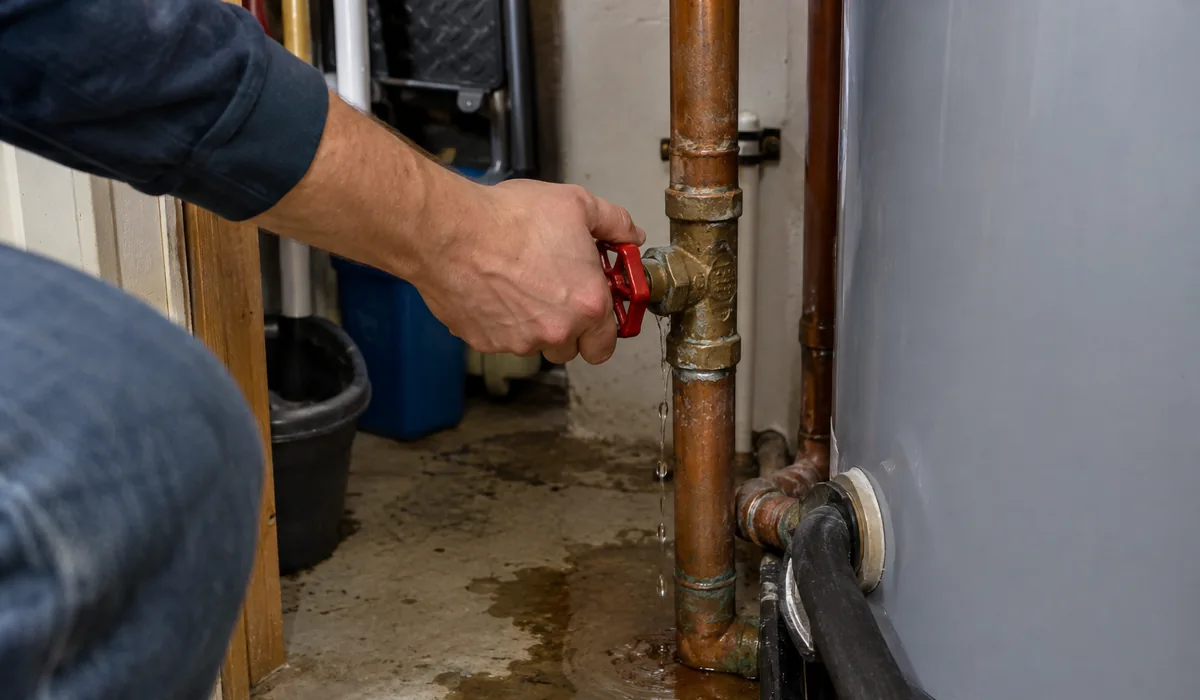
- Water heater: close the cold-water inlet valve on top and turn off the gas or the breaker.
- Roof leak: put a bucket under it and, if water is pooling in a sagging ceiling, keep everyone out from under it.
- Flooding from outside: you can’t stop it. Get to safety and follow local officials’ instructions.
2. Make it safe
Water and electricity are the biggest immediate danger.
- Don’t walk through standing water near outlets, cords, or appliances that are plugged in.
- Turn off power at the breaker panel only if you can reach it without standing in water. Otherwise call your power company.
- Stay out from under wet, sagging ceilings. Soaked drywall can collapse.
- If you smell gas, leave and call the gas company from outside.
- After a flood, the CDC warns against using generators or other gas-powered equipment indoors because of carbon monoxide.
3. Document everything before you clean
Your photos are the best evidence your claim will have.
- Take wide shots of each room and close-ups of damaged materials and belongings.
- Photograph the source: the split pipe, the failed supply line, the water heater, the roof damage.
- For flooding, photograph the waterline on walls.
- Video a slow walkthrough with your phone, narrating what you see.
- Keep damaged items until your adjuster says you can discard them, or photograph them first if they’re a health hazard.
4. Call your insurance company
Report the loss as soon as you can. Ask:
- Is the cause covered under my policy? (A sudden burst pipe usually is. Flood is not under a homeowners policy.)
- What’s my deductible?
- Do I need approval before mitigation starts, and is there any limit on it?
- Will an adjuster inspect, and when?
North Carolina’s insurance regulations set deadlines for insurers to acknowledge and investigate claims. Our insurance guide covers them.
5. Get water out and drying started
This is the step that decides whether a $2,000 problem becomes a $10,000 one. The EPA advises drying water-damaged materials within 24 to 48 hours to prevent mold growth.
- Small clean-water spills on hard floors: mop, towel, and run fans.
- Anything larger (wet carpet, water under flooring or in walls, a wet crawl space, any sewage or floodwater) calls for professional emergency water removal and structural drying.
While you wait:
- Move furniture, rugs, electronics, and papers off wet floors.
- Put aluminum foil or blocks under furniture legs that can’t be moved.
- Open closet and cabinet doors to let air circulate.
- Run your air conditioning to pull humidity down, unless the HVAC system itself got wet.
- Don’t use a household vacuum on water, and don’t turn on ceiling fixtures if the ceiling is wet.
6. Know what you’re dealing with
How dirty the water is changes what’s safe to do yourself. Under the IICRC S500 standard:
| Category | Source | What it means for you |
|---|---|---|
| 1 – Clean | Supply lines, faucets, rain | Safe to start cleanup yourself if it’s small |
| 2 – Gray | Washer, dishwasher, toilet overflow (urine only) | Wear gloves; porous materials may need removal |
| 3 – Black | Sewage, river or creek flooding, storm surge | Don’t handle without protective gear; porous materials generally come out |
If floodwater came in from outside, read water damage vs. flood damage before you call your insurer, because the claim goes to a different policy.
7. Keep records as the job goes on
- Get a written estimate before work beyond emergency extraction starts.
- Ask the restoration company for daily moisture readings and photos.
- Save receipts for anything you buy and any hotel or meal costs if you have to leave.
- Keep a log of every call with your insurer: date, person, and what was said.
The bottom line
If you're dealing with water damage now, call (980) 217-5532 and we'll try to connect you with a participating independent restoration company that serves your area. That company inspects the damage and quotes the job itself.