
Last updated: 2026-10-09
North Carolina Water Damage is a referral service that connects North Carolina homeowners and property managers with participating independent water damage restoration companies. This page explains what water damage restoration services cover, so you know what to expect, and what to ask, before anyone starts tearing out drywall.
What water damage restoration actually means
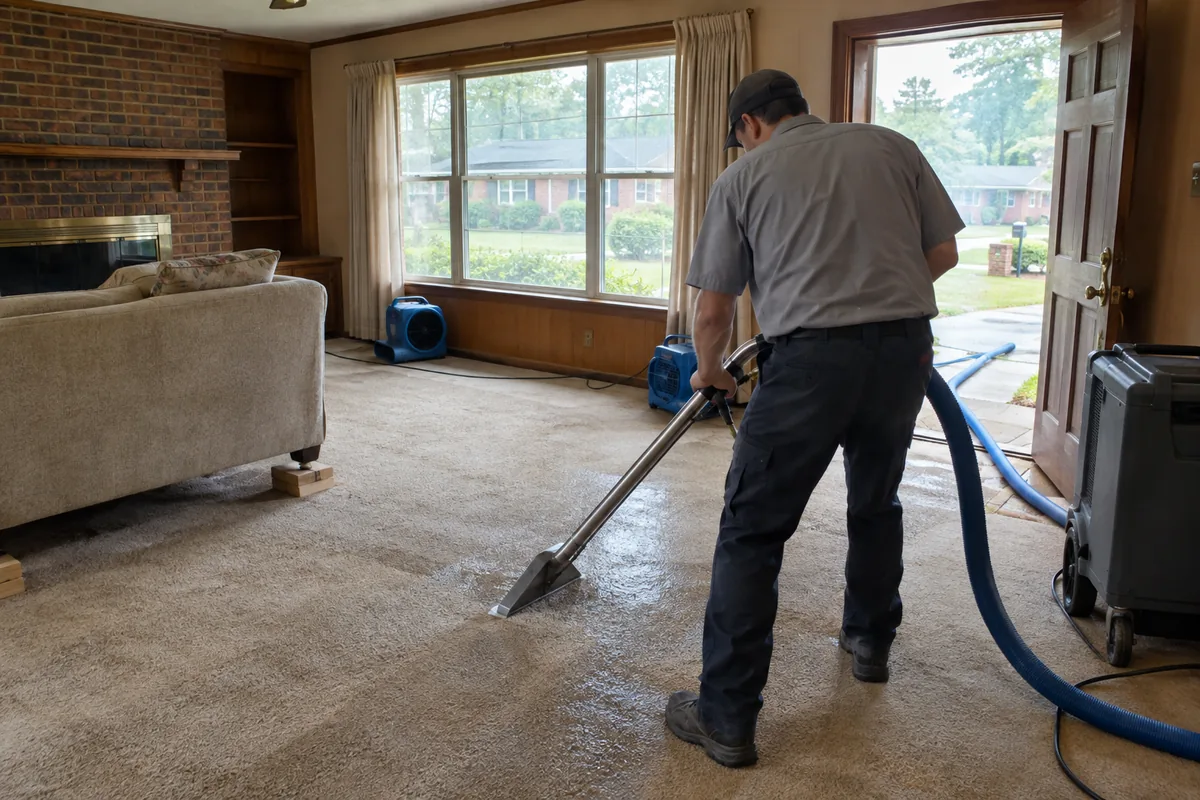
Water damage restoration is the work of getting a building back to its pre-loss condition after water gets where it shouldn't. In the trade it splits into two phases. Mitigation is the emergency part: stopping the spread, extracting water, removing materials that can't be saved, and drying the structure. Restoration (sometimes called rebuild or reconstruction) is putting back the drywall, flooring, cabinets, and trim afterward.
Some companies do both. Others only do mitigation and hand the rebuild to a general contractor. It's worth asking which kind you're talking to, because it changes how many contractors end up in your house and how your insurance claim is split.
The three things that decide how big the job is
Restoration companies in North Carolina, like everywhere else, work to the IICRC S500 standard for professional water damage restoration. It sorts every job by the kind of water and how far it spread, and those two labels drive almost every decision that follows.
- Water category (how dirty it is). Category 1 is clean water from a supply line or faucet. Category 2 is gray water with some contamination, like a washing machine discharge or dishwasher overflow. Category 3 is grossly contaminated: sewage, floodwater from outside, or water that has sat long enough to grow bacteria.
- Water class (how much is wet). Class 1 is a small area with little absorption. Class 2 means a whole room with water wicked up the walls. Class 3 usually means water came from above and soaked ceilings, walls, and floors. Class 4 covers dense materials like hardwood, plaster, and concrete that hold water and take longest to dry.
- Time. The EPA advises drying water-damaged materials within 24 to 48 hours to prevent mold. Clean water that sits also degrades: a Category 1 leak left for a couple of days is treated as Category 2.
Why North Carolina homes need a slightly different approach
Most restoration advice online is written for houses with basements. In North Carolina, older homes are mostly built over crawl spaces, and nearly all new homes in the South Atlantic region go on concrete slabs: 85.7% in 2024, according to Census construction data analyzed by NAHB. That changes where water goes.
In a crawl-space house, water from a burst supply line or a failed water heater runs through the subfloor into the crawl space, where it sits against floor joists in an area nobody looks at. On a slab, it spreads sideways under flooring and wicks up drywall. Either way the visible puddle is the smallest part of the problem, which is why a good restoration company maps moisture with meters rather than just extracting what it can see. Our crawl space water removal page covers that situation in detail.
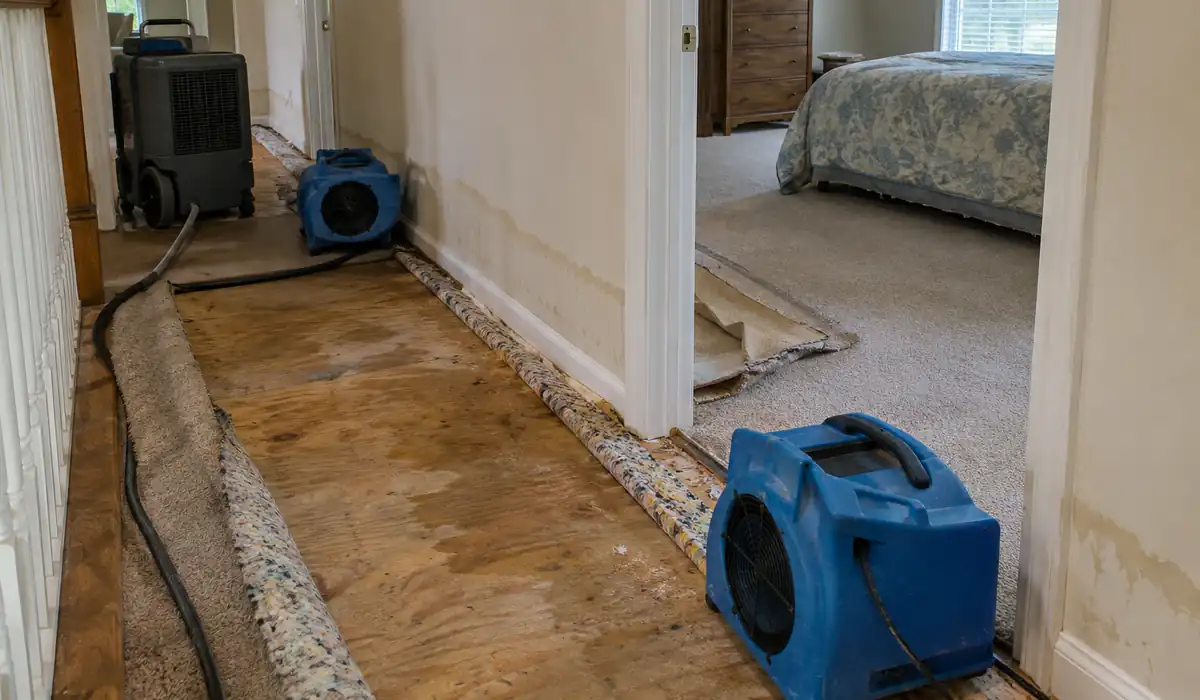
The other North Carolina factor is humidity. Muggy summer air slows natural drying and can push a wet crawl space or wall cavity past the mold threshold, which is why restoration companies here rely on dehumidifiers rather than open windows.
What it costs
HomeAdvisor's 2026 cost data puts the national average for water damage restoration at $3,868, with most homeowners paying between $1,383 and $6,369. Small jobs can come in around $450, and major losses reach $16,000 or more. Per square foot, HomeAdvisor lists about $3.50 for clean water, $5.25 for gray water, and $7.50 for black water (source).
Those are national figures, not a North Carolina quote, and every job is priced after an inspection. Our North Carolina water damage cost guide breaks down what moves the price and what insurance usually pays for.
Insurance: what's usually covered and what isn't
A standard North Carolina homeowners policy generally covers water damage that is sudden and accidental, such as a burst pipe or rain coming through a storm-damaged roof. It does not cover flood or rising water. The NC Department of Insurance is explicit that flood requires a separate policy, usually through the National Flood Insurance Program. Slow leaks, long-term seepage, and damage blamed on poor maintenance are commonly excluded, and sewer or drain backup is usually covered only if you added that endorsement.
Read your own policy or call your agent; our North Carolina water damage insurance guide walks through the common situations.
When to call a professional instead of handling it yourself
- Water has reached more than a small area of hard flooring, or soaked carpet and pad
- Water came from a toilet, sewer line, or outside flooding (Category 2 or 3)
- Drywall is soft, swelling, or wet more than an inch or two above the floor
- Water came through a ceiling, or a ceiling is sagging (stay out from under it)
- There's standing water in the crawl space, or a musty smell from below the floor
- You plan to file an insurance claim and need moisture readings and photos on record
What to do right now
- Stop the water. Shut off the main valve (often in the crawl space, a utility closet, or the meter box by the street) or the fixture's own valve.
- Make it safe. If water is near outlets, cords, or the panel, turn off power at the breaker only if you can do it without standing in water. Otherwise stay out and call your utility.
- Photograph everything before you move or throw anything out, including the source of the leak.
- Call your insurer to open a claim if the damage is more than minor.
- Get a restoration company out quickly, ideally inside the 24-to-48-hour window before mold becomes a risk.