
Skip to content

Independent referral service: calls connect you with participating North Carolina restoration companies. How it works

North Carolina Water Damage

Flood damage restoration

Flood Damage Cleanup in North Carolina

River, creek, stormwater, and storm-surge flooding is the most serious kind of water damage. What flood cleanup involves, what's safe to do yourself, and how insurance works for floods.

(980) 217-5532 · Referral to a participating independent company

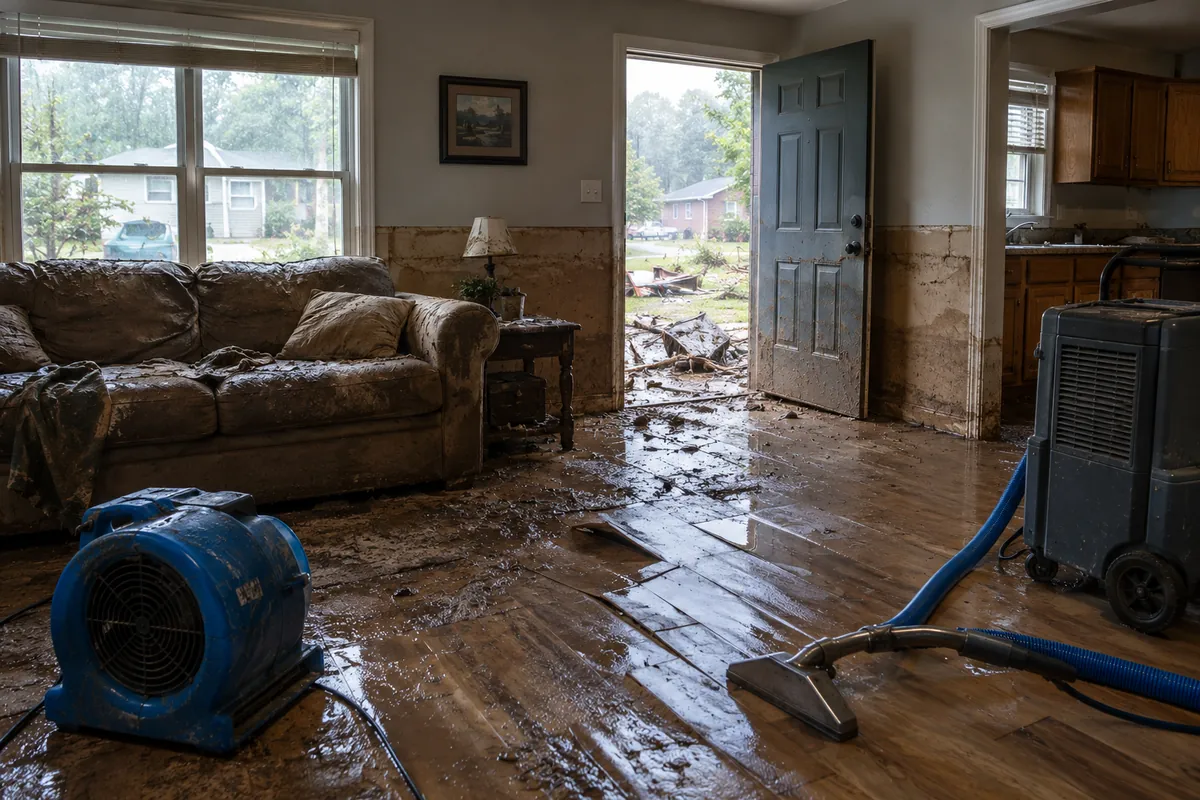
Flood-damaged living room with a waterline on the drywall and removed flooring stacked outside

Last updated: 2026-10-09

North Carolina Water Damage is a referral service that connects North Carolina property owners with participating independent restoration companies for flood cleanup. Flooding from outside the house is different from a burst pipe in three ways that matter: the water is contaminated, the cleanup is bigger, and the insurance is separate.

Why floodwater is treated as contaminated

Under the IICRC S500 standard, water that comes in from rivers, creeks, surface runoff, or the ocean is Category 3, the most contaminated class, regardless of how clear it looks. Floodwater picks up sewage, fuel, chemicals, and soil on its way in.

That changes the work. Porous materials the water touched, including carpet, pad, insulation, upholstered furniture, and the lower portion of drywall, are generally removed rather than dried. The remaining structure is cleaned and treated before drying starts. The CDC's guidance on reentering a flooded home covers the safety side, including throwing out any food the water touched.

What flood damage restoration involves

A typical flood cleanup by a restoration company runs in this order:

  • Safety check: power off to flooded areas, gas checked, structure assessed for obvious damage.
  • Water and mud removal with pumps and extractors, then shoveling and squeegeeing silt.
  • Flood cuts: drywall removed in a straight line above the waterline so wet insulation and framing can be reached and dried. The cut is commonly a foot or more above the high-water mark.
  • Removal of contaminated materials: flooring, insulation, cabinets that won't dry, and saturated contents.
  • Cleaning and antimicrobial treatment of framing, slabs, and the crawl space.
  • Structural drying with air movers and dehumidifiers until moisture readings reach dry targets, then rebuild.

Flooding in North Carolina

North Carolina floods from both ends of the state. Hurricane Florence in 2018 dropped 23.05 inches of rain at Wilmington's airport, the wettest event on record there, and flooded an estimated 74,563 structures across the region (National Weather Service). Six years later, Helene devastated western North Carolina, far from the coast.

Flooding isn't only a hurricane problem. In Raleigh, many of the worst Crabtree Creek floods came from unnamed storms, and Charlotte has bought out hundreds of homes along its creeks. Local pages for Wilmington, Raleigh, and Charlotte cover the details.

Flood insurance: the part most people don't have

Standard homeowners policies do not cover flood or rising water. The NC Department of Insurance says flood coverage requires a separate policy, usually through the National Flood Insurance Program (NFIP), and that new policies usually carry a 30-day waiting period. After Helene, fewer than 1% of affected households in western North Carolina had flood insurance (Carolina Public Press).

If you do have an NFIP policy, report the loss right away and document everything before it's removed. The NFIP requires a signed proof of loss, normally within 60 days of the flood. If you don't have flood insurance, ask about FEMA individual assistance after a declared disaster. The difference between flood and other water damage is explained in our water damage vs. flood damage guide.

When flood cleanup needs a professional

  • Any floodwater that came inside the living space or crawl space
  • Water that reached drywall, insulation, or the HVAC system
  • Mud or silt left behind after the water receded
  • Flooding that reached the electrical panel, outlets, or a gas appliance
  • You plan to file a flood insurance or FEMA claim and need documentation
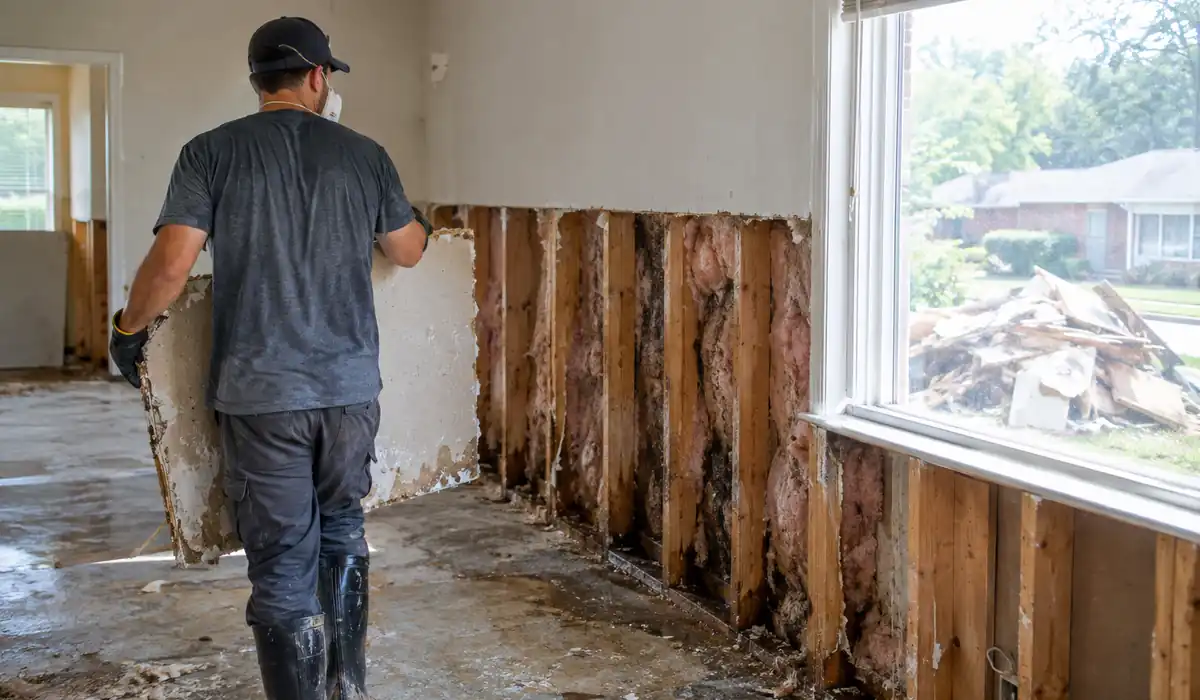
Drywall cut out above a flood line with fans and a dehumidifier running in the room

What to do after a flood

  1. Don't go back in until it's safe. Follow local officials' guidance, and stay out if you smell gas or the structure looks damaged.
  2. Keep the power off in flooded areas until an electrician has checked the system.
  3. Never run a generator indoors or in a garage. The CDC warns that generator exhaust can cause deadly carbon monoxide poisoning.
  4. Wear boots, gloves, and an N95 mask if you must handle anything the water touched.
  5. Photograph and video everything, including the high-water mark on the walls, before removal.
  6. Contact your flood insurer, or FEMA if a disaster has been declared, then get a restoration company in to start removal and drying.

Related water damage guides

Straight comparison

DIY cleanup or a professional restoration company?

 DIY with a shop-vac and fansProfessional restoration
Small, clean-water spill caught right awayOften fine: a few square feet of hard floor, dried within a dayUsually not needed
Water under flooring or inside wallsFans dry the surface; moisture stays in pad, subfloor, and wall cavitiesMoisture meters and thermal cameras find hidden water; drying is checked with readings
Sewage or floodwater (Category 3)Not safe for DIY: bacteria and contaminants soak into porous materialsProtective gear, removal of contaminated materials, cleaning and antimicrobial treatment
Wet crawl spaceHard to reach, hard to dry, easy to missPumps, extraction, and dehumidification sized to the space
Insurance claimYou document it yourselfPhoto and moisture-reading records adjusters ask for
Mold riskUnknown until it smells or showsDrying is verified against target readings to cut mold risk

What restoration involves

The water damage restoration process, step by step

  1. Inspection and moisture mapping

    The restoration company finds the water source, identifies the water category (clean, gray, or black under the IICRC S500 standard), and maps how far moisture has spread into floors, walls, and framing with moisture meters.

  2. Water extraction

    Standing water is pulled out with truck-mounted or portable extractors. Extraction removes far more water than drying ever will, so it comes first.

  3. Removal of what can't be saved

    Saturated carpet pad, swollen particleboard, and wet insulation usually come out. After sewage or floodwater, porous materials that touched the water are removed.

  4. Structural drying

    Air movers and dehumidifiers run for several days while the technician takes daily readings until materials reach dry targets.

  5. Repairs

    Drywall, flooring, and trim are replaced once everything reads dry. Some restoration companies handle rebuild themselves; others refer it out.

How the referral works

How our contractor-matching service works

  1. You call the number on this site

    Have the property's address or ZIP code ready, plus a short description of what happened: a burst pipe, flooding, a leak, a wet crawl space.

  2. Your call is routed to a participating company

    Your call is connected with a participating independent restoration company that serves your area, if one is available. We do not send a crew ourselves.

  3. You deal with that company directly

    The restoration company inspects, quotes, and does the work under its own name, license, and insurance. You decide whether to hire them; there is no obligation.

Good to know: availability depends on which participating companies cover your ZIP code and how busy they are. Ask the company you're connected with about its license, insurance, written estimate, and timeline before work starts. Our water damage guides cover what to ask.

Request Water Damage Assistance

Call and we will try to connect you with a participating independent water damage restoration company that serves your area.

Questions

Flood Damage Cleanup questions

Does homeowners insurance cover flood damage in North Carolina?

No. Homeowners policies exclude flood and rising water. Flood damage is covered only by a separate flood policy, usually through the NFIP. Rain coming through a storm-damaged roof is different: that's generally covered by homeowners insurance.

Can flooded drywall be dried instead of replaced?

Not after floodwater. Floodwater is Category 3, and contaminated drywall and the insulation behind it are generally removed above the waterline. Drywall wet by a clean supply line is a different case and can sometimes be dried in place.

How long does flood cleanup take?

Removal and drying of a flooded house usually takes one to two weeks, depending on how deep the water was, how much material comes out, and the weather. Rebuild is a separate phase and often takes longer, especially after a regional flood when contractors are stretched.

Are participating companies available after a hurricane?

Availability after a major storm depends on how many participating companies cover your area and how busy they are. Call to check. Be cautious of out-of-area contractors going door to door, and get any agreement in writing.

Call (980) 217-5532 · Get Help