
Decision Guide
Does homeowners insurance cover water damage in North Carolina?
What North Carolina homeowners policies usually cover and exclude for water damage: burst pipes, roof leaks, slow leaks, sewer backup, flood, and how the claim process works.
Usually yes, if the water damage was sudden and accidental, like a burst pipe, a failed supply line, or rain through a storm-damaged roof. North Carolina homeowners policies exclude flood and rising water, and commonly exclude slow leaks, poor maintenance, and sewer backup unless you added an endorsement. Your deductible applies.
Published 2026-10-09 · Updated 2026-10-09
North Carolina Water Damage is a referral service that connects North Carolina property owners with participating independent restoration companies. We’re not an insurance agency and this isn’t legal or insurance advice. It’s a plain-English summary of how water damage coverage generally works here, so you know what to ask your agent.
The rule of thumb: sudden and accidental
Homeowners policies are built around sudden and accidental water damage. If something broke without warning and water came out, the damage is usually covered. If water got in slowly over time, came from outside as a flood, or resulted from something that wasn’t maintained, it usually isn’t.
The NC Department of Insurance states plainly that homeowners policies do not cover flood or rising water, and HomeAdvisor’s cost guide gives the same general rule: covered for sudden events like burst pipes, not for neglect.
Common situations
| What happened | Usually covered? | Notes |
|---|---|---|
| Burst or frozen pipe | Yes | Exception: freeze damage in a vacant home where heat wasn’t maintained or water wasn’t shut off and drained |
| Washing machine or dishwasher supply line bursts | Yes | The appliance itself usually isn’t covered |
| Water heater suddenly fails and leaks | Yes (the water damage) | Replacing the old heater usually isn’t |
| Rain through a roof damaged by wind, hail, or a fallen tree | Yes | On the coast, a hurricane or named-storm deductible may apply |
| Roof leak from age and wear | Often no | Treated as maintenance |
| Slow leak under a sink or behind a shower for months | Usually no | “Continuous or repeated seepage” exclusion |
| Sewer or drain backup | Only with an endorsement | Check for “water backup” on your declarations page |
| River, creek, storm-surge, or surface flooding | No | Needs a separate flood policy |
| Groundwater seeping into a crawl space or basement | Usually no | Often treated as surface water or seepage |
| Mold | Limited | Many policies cap mold coverage or cover it only when it results from a covered loss |
Flood is a different policy
Flood damage is covered only by flood insurance, usually through the National Flood Insurance Program (NFIP). New NFIP policies generally take 30 days to go into effect, with exceptions, for example when the policy is bought in connection with a new mortgage.
The NFIP defines a flood as a general and temporary condition of partial or complete inundation of two or more acres of normally dry land or two or more properties, one of which is yours. That’s why a single burst pipe is never a “flood” for insurance purposes, even if your floor is underwater. Our water damage vs. flood damage guide explains the line in detail.
Few North Carolinians carry flood insurance. After Helene, fewer than 1% of affected households in western North Carolina had it (Carolina Public Press).
What the claim usually pays for
When the cause is covered, the claim typically includes:
- Mitigation: water extraction, removal of damaged materials, and structural drying
- Repairs: drywall, flooring, cabinets, paint
- Damaged belongings (personal property), subject to your policy’s terms
- Additional living expenses if the home isn’t livable during repairs
Your deductible comes off the total. The cause itself, such as the pipe, the appliance, or the old water heater, often isn’t covered; the damage it caused is.
Your duties after a loss
Policies require you to take reasonable steps to protect the property from further damage. In practice that means:
- Stop the water and report the loss promptly.
- Get extraction and drying started rather than waiting for an adjuster. Keep receipts.
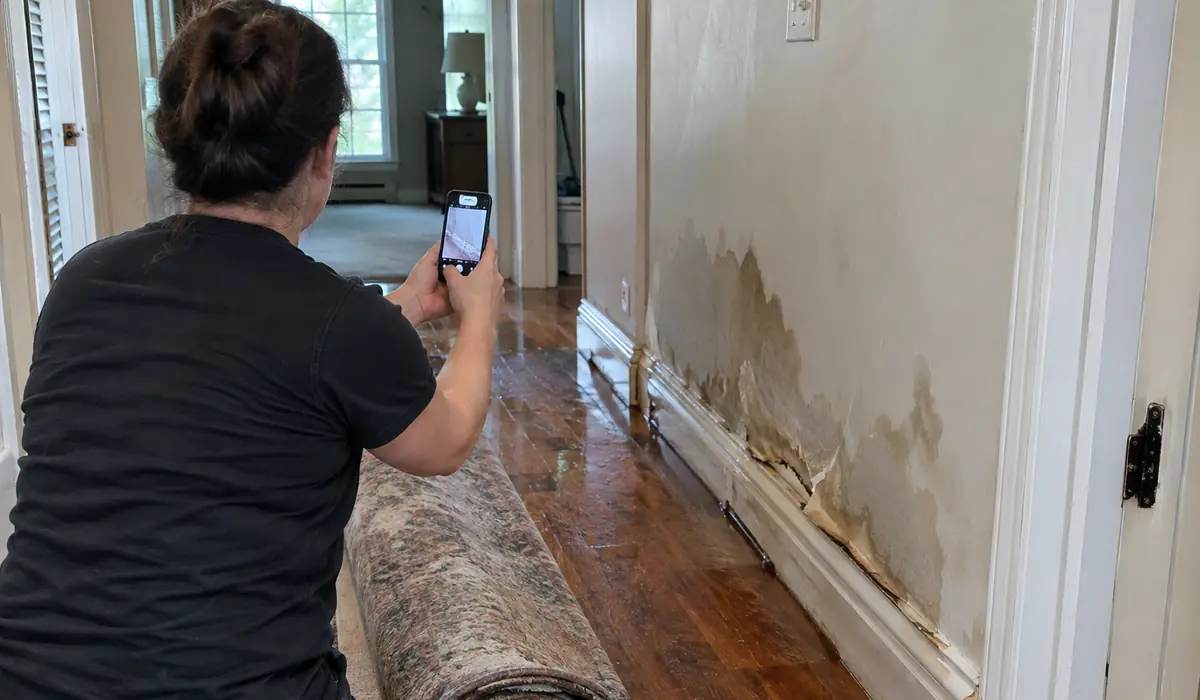
- Photograph everything and keep damaged items until the adjuster says otherwise.
- Keep the restoration company’s moisture readings and photos.
See what to do immediately after water damage for the full checklist.
North Carolina claim-handling deadlines
North Carolina’s insurance regulations (11 NCAC 04) and unfair claims practices law (G.S. 58-63-15) set expectations for how insurers handle claims. As summarized by North Carolina attorneys, insurers generally must:
- Acknowledge your claim and send any proof-of-loss forms within 30 days
- Complete the investigation within 30 days of receiving a completed proof of loss, with written updates every 45 days if it takes longer
- Pay within 10 business days after you agree on the amount
- Explain any denial in writing, citing the policy language
If you believe your claim is being handled unfairly, the NC Department of Insurance accepts consumer complaints.
Renters and landlords
If you rent, the landlord’s policy covers the building and the landlord is responsible for plumbing repairs under G.S. 42-42. Your renters policy covers your belongings and, often, temporary housing. Notify the landlord in writing unless it’s an emergency.
Questions to ask your agent today
- Do I have water backup (sewer backup) coverage, and what’s the limit?
- Is my home in or near a flood zone, and what would a flood policy cost?
- Do I have a separate hurricane or wind deductible?
- How does my policy handle mold?
- Is there a limit on mitigation or emergency services?
The bottom line
If you're dealing with water damage now, call (980) 217-5532 and we'll try to connect you with a participating independent restoration company that serves your area. That company inspects the damage and quotes the job itself.